A Deeper Understanding Of Honeybees
Recently, I interviewed Dr. Randolf Menzel, a world-renowned Neurobiologist and Professor Emeritus, at the Free University of Berlin about his fascinating work with honeybee brains. He mentioned another brilliant scientist, Dr. Thomas D. Seeley, a professor from Cornell University, who also wrote the book, Honeybee Democracy. Dr. Seeley, much like his esteemed colleague, view honeybees with great respect, admiration and understanding.

Now that Spring has arrived, honeybees are beginning to swarm. Most people do not understand why bees swarm much less the benefit of a swarm. In this interview, Dr. Seeley explains how sophisticated the honeybee is as an individual as well as how each bee works together within the colony. It is truly amazing!
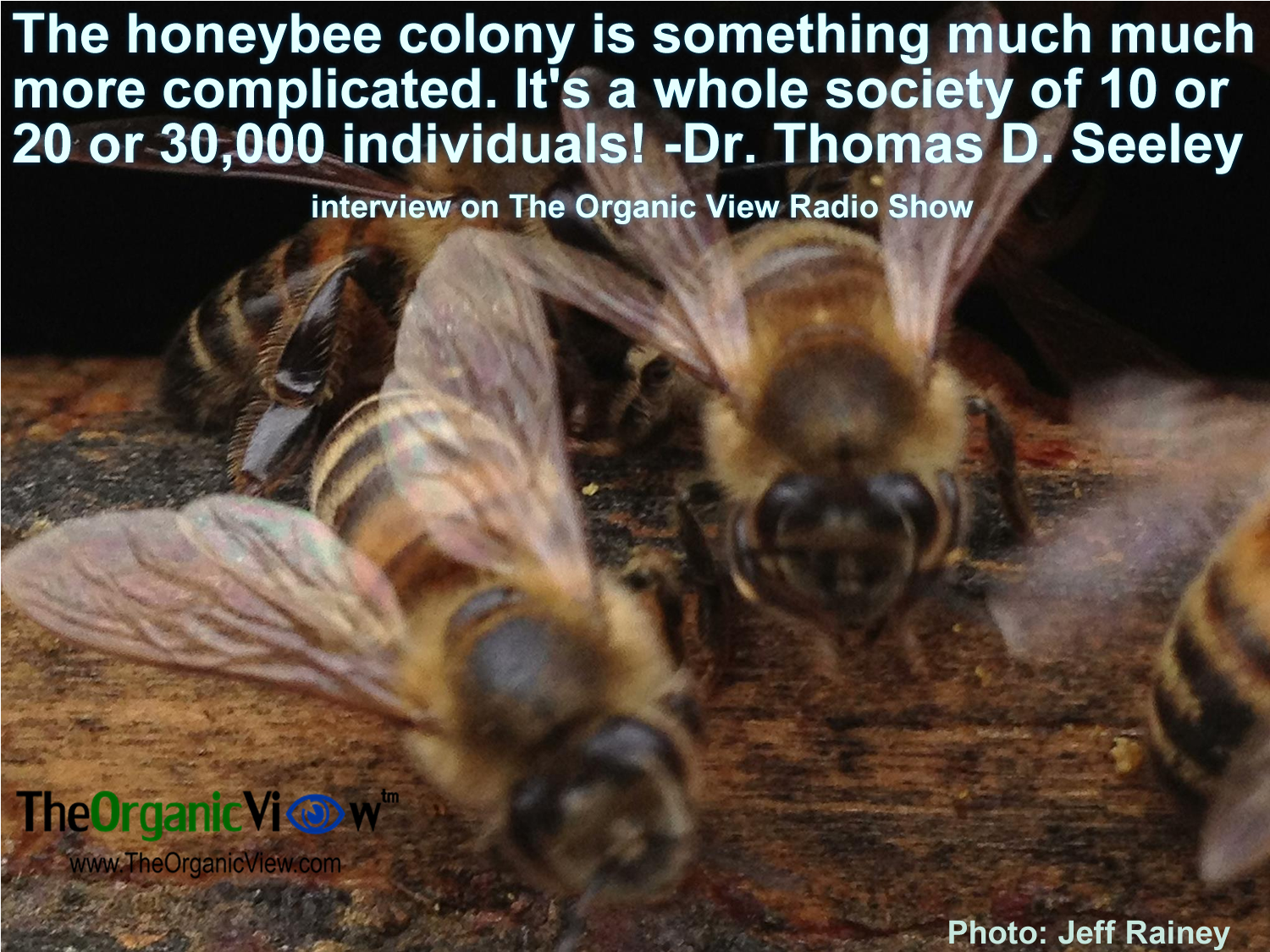
A honeybee must learn how to navigate to and from the hive without a GPS system, map,etc. Think about how many times a human being must learn something before it has been mastered!
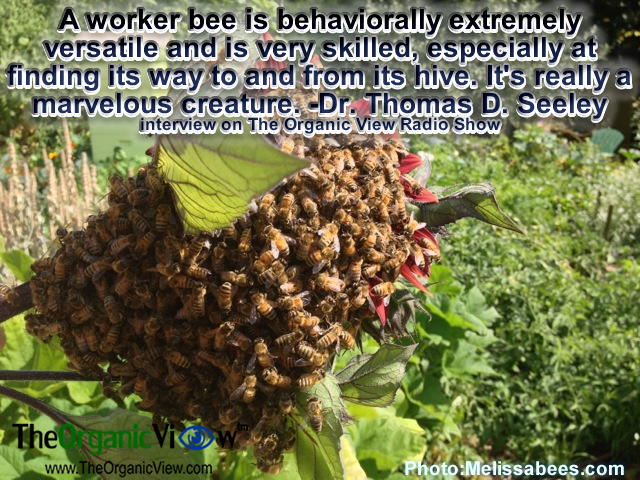
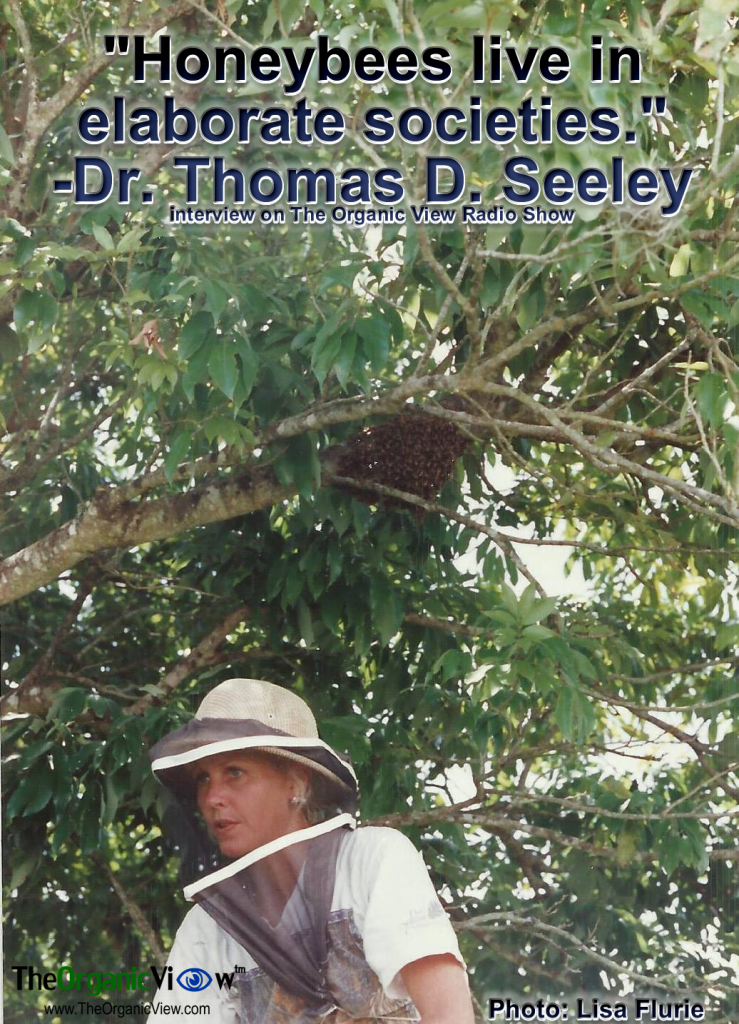
Don’t Overreact To Swarms
Some people are quick to call an exterminator or use a chemical to kill the swarm. My good friend and bee advocate, Tom Theobald commented that “killing a swarm is like killing a puppy”!

So, what should you do if there is a swarm that is in an undesirable location (such as your garage, playhouse, etc.? Call a beekeeper! If you don’t know of any local beekeepers, google beekeeping clubs in your area or contact your local extension for references.
Most beekeepers are more than happy to retrieve them and may not charge, especially since so many honeybees have been devastated due to neonicotinoid exposure which has drastically reduced honeybee populations.
Swarms: A Bee-utiful Future!
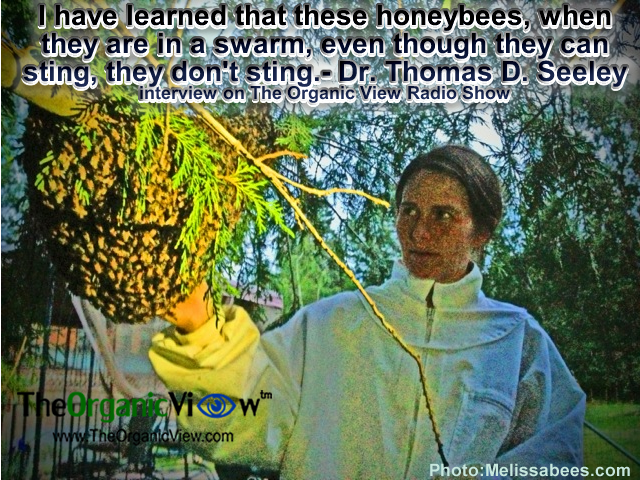
According to Dr. Seeley, “if someone sees a swarm, it is really important and valuable to realize that:
a: these bees are not defensive and not dangerous
b: these bees are not taking up residence where they are clustering.
They are in a temporary bivouac in the process of looking for a new home and they are going to move on. No need to call the exterminator and no need to get in a panic. In a few days, the bees will be gone!”

Listen To The Interview
In this segment of The Organic View Radio Show, Dr. Thomas D. Seeley, Horace White Professor in Biology and Chair, Department of Neurobiology and Behavior, Cornell University, explains to host, June Stoyer, why swarms are vital for a honeybee colony and should be protected. Please click the link in the video to listen to the interview.
Learn About Dr. Thomas D. Seeley
Dr. Seeley received his undergraduate degree in chemistry from Dartmouth College. He received his PhD in 1978 from Harvard University, where he studied with Bert Hölldobler and Edward O. Wilson. He held a postdoctoral fellowship in the Society of Fellows at Harvard until 1980, when he accepted a faculty position at Yale University. He remained there until 1986, when he joined the Department of Neurobiology and Behavior at Cornell University.

Dr. Thomas D. Seeley
In recognition of his scientific work, he has received the Alexander von Humboldt Distinguished U.S. Scientist Prize, been awarded a Guggenheim Fellowship, received a Gold Medal Book Award from Apimondia for The Wisdom of the Hive, and been elected a Fellow of both the Animal Behavior Society and the American Academy of Arts and Sciences. His most enduring honor, though, is to have had a species of bee named after him: Neocorynurella seeleyi