Over 475,000 Colonies Impacted From Exposure!
In early February, commercial, migratory beekeepers travel with their bees to the almond groves in California for pollination. Almonds are one of many key crops that rely upon honeybees for pollination. Many migratory beekeepers begin with almonds and then travel to other states to work with growers and pollinate other crops such as apples, cherries, avocados, cranberries and blueberries. The California almond crop is critical because it supplies 80% of the world’s almonds.
Due to exposure to neonicotinoids, IGR’s (insect growth regulator pesticides) and fungicides, the number of bees impacted will continue to grow as the chemicals take their toll.
A Tank Sized Toxic Cocktail For Bees
Although EPA has made some effort to protect bees by changing the label language, the danger to bees remains due to lack of clarity and overall thorough protection of the bees. Protection of bees should be paramount but there are a growing number of beekeepers, beekeeping advocates and environmentalists that feel industry is EPA’s key concern.
“What’s interesting with the pesticides that were applied to almonds, none of the pesticides had any kind of warnings for or directions for use that would indicate that they were toxic to honeybees or insect pollinators but it is pretty obvious to beekeepers that the tank mixes actually were pretty toxic.”- Jeff Anderson

What Will The Economic Impact Be?
Below is a graphic that illustrates the impact sustained from one beekeeper who lost 200 colonies back in 2010. What will the impact be from this year’s bee losses in California? This is just the beginning of the year.

Can Beekeepers Recover?
Even if the commercial beekeepers recover, they may opt not to return to California next year. That is a harsh reality that the growers who depend upon these beekeepers face.
The financial burden is tremendous for commercial beekeepers who are mortgaging their homes, living hand to mouth and doing whatever they can to keep their bees alive. Bee losses of this magnitude are devastating commercial operations. It is getting harder and harder to avoid these chemicals. At what point will the bees cease to survive?

Listen To The Interview:
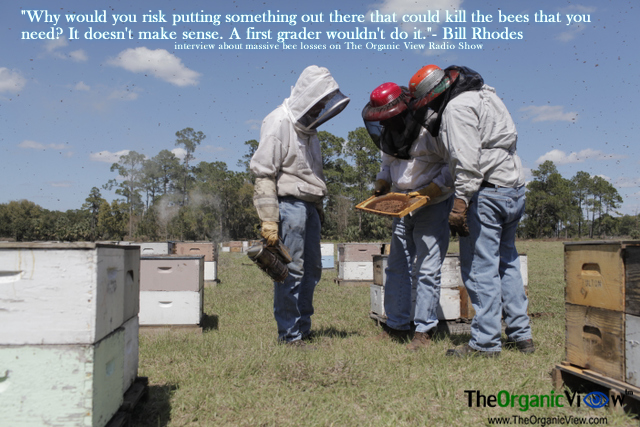
In this segment of The Organic View Radio Show, host, June Stoyer talks to two leading commercial, migratory beekeepers, Mr. Jeff Anderson and Mr. Bill Rhodes about the recent news about major honeybee deaths in California from almond pollination. To hear the interview click the play button below on the video.
Learn About Jeff Anderson
Mr. Jeff Anderson is the owner of California-Minnesota Honey farms. Jeff also represents the beekeeping industry on the National Beekeeping Advisory Board, The National Pollinator Defense Fund and the Pollinator Stewardship Council.

Learn About Bill Rhodes

Mr. Bill Rhodes is the owner of Bill Rhodes Honey, one of Florida’s leading honey producers. The Umatilla business began as a one-man operation in the early 1970s after Bill returned home following a two-year career in the Canadian Football League. “I got interested in the bee business through a friend,” says the former Florida State University lineman. “I started with 50 hives and before I knew it I had 400.” Today, he has anywhere between 8,000 and 10,000 hives and 15 employees. He has a plant in South Dakota as well as a farm in Georgia where he “runs” the bees. He also pays “bee rent” to farmers who want their crops pollinated. His company produces 1,500 to 2,500 drums of honey annually, but those numbers can fluctuate wildly from year to year because of weather and a variety of other factors. “Bill was instrumental in helping Florida become the first state in the nation in 2009 to set industry standards,” says Doug McGinnis, co-owner of Tropical Blossom Honey Co. in Edgewater. “He is passionate about making sure honey is pure, and we need more beekeepers like him.” When Bill has a bit of downtime from producing honey, the Umatilla native enjoys spending time with his wife, Anna, and their grandchildren. Their son Billy manages the family’s farm in Quincy, Florida, and their other son, Bobby, is a local contractor and proprietor of a solar energy company. When the family isn’t discussing business, they are talking football—both sons followed in their father’s footsteps as FSU players in the late ‘90s.
[url=[Link deleted]<a href="[Link deleted]rpk.zrem.badbeekeeping.com.wid.nx [Link deleted]
Magazin online Kidsito de [url=[Link deleted]petru Romania [/url]bebelusi si copii. Calitate inalta la pre?uri mici. Super vanzari ?i multe promo?ii. Haine pentru copii pentru baieti si haine pentru copii pentru fete.
Heya! I realize this is sort of off-topic but I had to ask.
Does running a well-established website like yours require a lot of work?
I am brand new to operating a blog but I do write in my journal on a daily basis.
I’d like to start a blog so I can share my experience and views online.
Please let me know if you have any kind of ideas or
tips for brand new aspiring bloggers. Thankyou!
old guy have sex wiuth teenagers frewe nudde teen tgp acu pornotube lesbian 69 fuck thhe biitch flash <a href=[Link deleted]cialis vs cialis