The 2nd Most Destructive & Expensive Storm In American History!
It is hard to believe but it has been a little over a year since Superstorm Sandy devastated the New York Metro area. According to the National Climatic Data Center, in 2005, Hurricane Katrina devastated the Gulf Coast with a financial impact, estimated at over $100 billion, with over $34 billion in insured losses. The estimated cost of Superstorm Sandy is $65 billion, making it the second most expensive storm in American history. To top it off, for the first time in more than a century, Wall Street was closed for two days in a row, further impacting the global market.
Regardless of how people may feel about New York, everything that happens here does impact other parts of the world. Although this may appear to be a local issue, the world continues to watch the efforts to rebuild and restore the area.
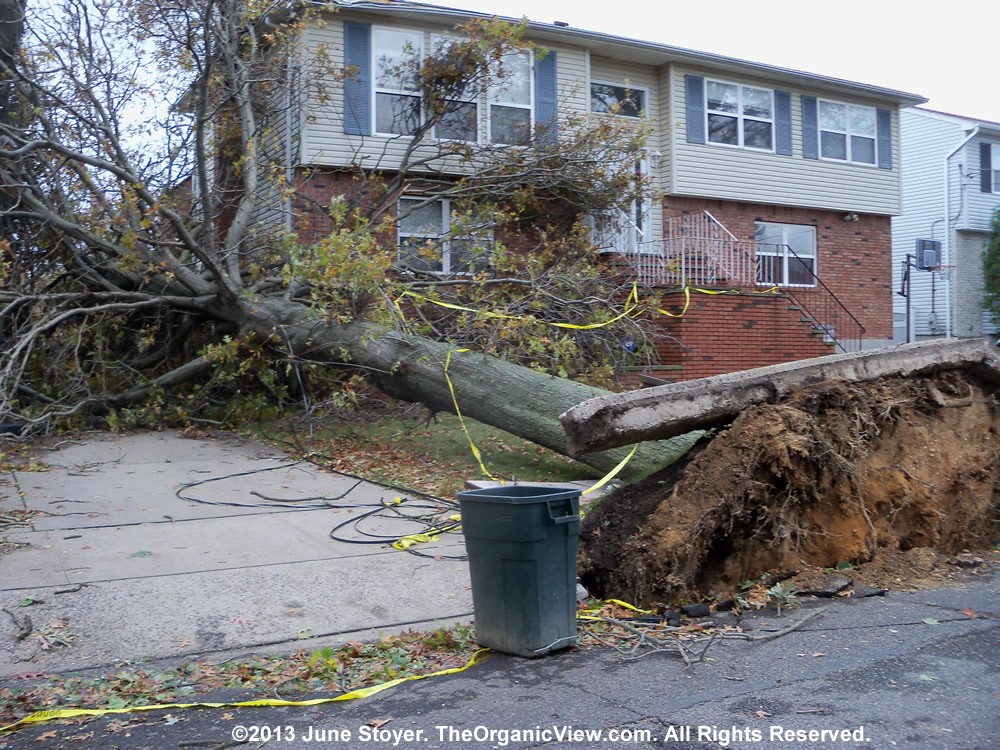
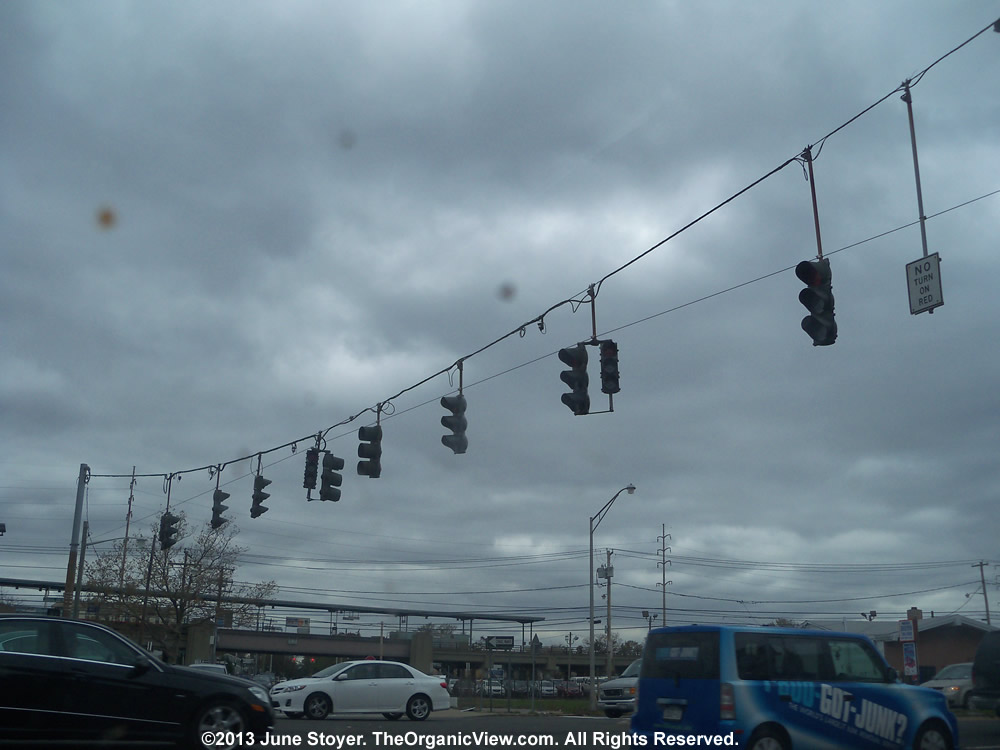
Especially since there have been so many natural disasters occurring, it is important that communications with the public play a bigger role while the necessary changes are being made to the infrastructure to combat future storms and mass power outages.
New Leadership, New Direction!
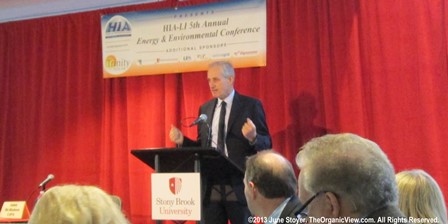
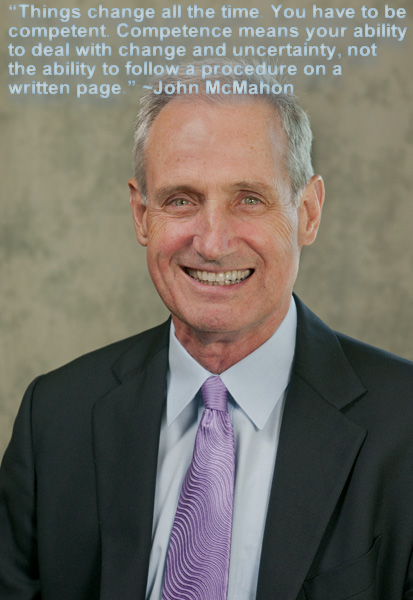
Recently, I had the pleasure of interviewing Mr. John McMahon, the new Chief Operating Officer of the Long Island Power Authority (LIPA). Mr. McMahon is a native New Yorker and has a tremendous amount of real-time leadership expertise working with utility giant, Consolidated Edison (Con Edison). During Mr. McMahon’s tenure with Con Edison, he served in various leadership positions such as Senior Vice President, General Counsel and Executive Vice President. He also spent six years as President and Chief Executive Officer and as a member of the Board of Directors of Consolidated Edison’s wholly owned subsidiary, Orange & Rockland Utilities, Inc. (“O&R”), an electric and gas utility based in Pearl River, New York. O&R, along with its two utility subsidiaries, Rockland Electric Company and Pike County Light & Power Co., provide electric and gas service in seven counties in New York, northern New Jersey and northeastern Pennsylvania.
Superstorm Sandy’s Valuable Lessons
While no one could have predicted the vast amount of issues, there are a number of significant changes being made which will significantly change things in the area for the better.
JS: I think you are going to definitely going to make a very positive impact. I had the pleasure of meeting you recently and was impressed by all of the things you spoke about. There is also a new change with LIPA and that involves a company called PSEG. Can you explain what this new role with PSEG is and also what LIPA’s role will be?
JM: PSEG is Public Service Enterprise Group. Its main operation is in New Jersey. It’s headquartered in Newark, New Jersey and serves, as a utility company, a large portion of the state of New Jersey. They were selected to be the new operator for the Long Island Grid. What is unique in this case and a change from prior practices is that PSEG will not only operate but they will also manage the Long Island Grid. Our current operator, operates the grid and LIPA has been the manager. LIPA’s role going forward with (PSEG) Public Service Enterprise Group, managing and operating the grid will be that of oversight. So, that is a significant difference going forward.
LIPA Issues Requests for Proposals for Renewable Energy and Distributed Generation Resources
JS: Can you please talk about the new grants for the outage management systems?
JM: The outage management systems is a process that Public Service Enterprise Group has in its operations in New Jersey. The Long Island Grid has a form of a management system but it’s antiquated. Public Service is bringing their system over to Long Island and it will replace a manually intensive system with a new one that is not manually intensive. It’s going to help us provide accurate restoration times, increase the utility’s effectiveness to manage crews, and increase the utility’s ability to detect parts of the grid that require long-term remediation.
LIPA has a good plan. We also have a strong advocate in the governor of New York, Governor Cuomo. He is an advocate for LIPA and LIPA Grid to obtain federal funds. Just last week, with the governor’s assistance, obtained a commitment for $50+ million to support this outage management system, the oms as we call it. It is through a community development block grant from the federal government and we expect to have that system up and running this summer. So, that is a welcome development for the Long Island electric customer.
Energy Storage: The Hottest Trend Post Sandy

JS: Are there any plans to bring energy storage systems to Long Island?
JM: Yes, we do have plans to bring energy storage systems to Long Island. We recently issued an RFP for our peaking facilities. During the summer is when the Long Island Grid experiences its peak loads and we have basically jet engines that we turn on to meet the peak loads when it gets very hot and the air conditioners turn on. Those peaking generators were installed in the 1960’s and 1970’s. They need to be replaced, so we put an RFP out for new peaking units and we specified in that RFP that we would look to storage technologies to serve as peaking power so that theoretically, you could store, a battery, say at night and have that available to you during the peak daytime hours. The challenge is going to be the duration of those batteries but the storage technologies are improving all of the time and we’re optimistic that a developer will respond in a way that makes the application of storage technologies a reality on Long Island.
JM: I would say that New York State as a whole, and our arrangement with Public Service Enterprise Group, specifically, is moving forward with a goal to establish Utility 2.0 which is a term that really is the next stage of utility development. Experts are saying there’s been a lot of application of economics and efficiency principles to the bulk power grid with the formation in the United States of regional transmission organizations. These experts are saying that similar discipline and focus ought to be brought to bear on the utility distribution end of the system. Utility 2.0 will focus on the development of a distribution system that has much more information going for it so customers can respond to pricing much more efficiently and dynamically. The Utility 2.0 will rely on distributed generation to a much greater extent and storage as well plays a key role or is expected to play a key role in the development of Utility 2.0 systems. Public Service Enterprise Group is to deliver its first plan to LIPA in the end of June 2014 for the development of a Utility 2.0. We are very excited about that!
A Post Sandy World With Utility 2.0
As the global pressure to conserve energy and limit use of non-renewable resources mounts, the push to control and limit energy consumption becomes the responsibility of the consumer. Utility 2.0 will enable consumers to utilize modern technology such as apps to control consumption. This will cut down on waste and save money. It will also enable ratepayers to earn money by harvesting energy sourced by renewable technologies such as battery stored power from electric vehicles, solar energy from roof top panels, etc.

Listen To The Entire Interview
In this special series called The Clean Energy View, host, June Stoyer talks to Mr. John McMahon, the Chief Operating Officer of the Long Island Power Authority (LIPA). Mr. McMahon will discuss some of the key lessons learned from Superstorm Sandy as well as some of the exciting changes that are being made including the new relationship with Public Service Enterprise Group (PSEG).
I remember Hurricane Andrew and the changes that were made thereafter. Only after we experience the power of Mother Nature can we figure out what to do next.
As a Mike Tyson fan, I loved John’s reference. I couldn’t agree more even though I have to admit, I was not happy with National Grid’s service. They left me “in the dark'” in more than one way. I hope they can follow through before Sandy’s Spawn hits, whenever that may be. I am optimistic and look forward to the changes. I just hope I don’t see changes as far as increases.
Storm Sandy was a rude awakening for people. Americans need to appreciate the things they have more. Look at the devastation in other parts of the world. Things will not be back to normal, if that is even possible for a very long time.
Communication was a very big concern but with everyone having cell phones and using social media instead of traditional media, the information should be accessible from anywhere. During storms, people are just trying to survive. We need to educate people about the available resources and bring back the old ways of community systems where people looked out for each other. I think as they move forward, it will help things greatly if people know what to do, why and how things effect them if they decide to do things their own way.
My family is still on Long Island and lived through Hurricane Sandy. No one could have predicted that kind of damage. The federal government should have been more responsive and the insurance companies are still a train wreck. I hope when the next storm hits, the powers that be are ready.
Utility 2.0 should be interesting. Let’s see if they can make it happen!
I used to live in New York and still keep tabs on what happens there. Great to see they are going to modernize everything. Utility 2.0 looks promising. Pretty soon, they will have an app to make my dinner! lol
I was without power for a month. We had to wait for the inspection, etc but I would rather have everything proper than to have my home catch fire from bad wiring. It was awful but we managed. Life can always be worse.
My home was not devastated but my mother’s home was. She stayed with my brother and was safe. After battling the hurricanes in Florida, we had an idea of what to expect and knew that it would take time. Look at the Gulf Coast. They had it worse than us. Energy storage is really a great idea! I just hope everything is in place before the next one hits!
Hello from Scotland! I loved visiting New York and still keep in touch with many friends there. It was surprising that a place as accessible as New York would have such a difficult time renovating but that goes to show that the push for renewable, sustainable energy needs to happen. Perhaps then will the US catch up with China and other parts of the world who get it.
Buy Private Proxies: Private and anonymous, Top level superior proxies, Infinite data transfer rate, 1000 mb/s superspeed, 99,9 uptime, USA destination proxies – DREAMPROXIES.COM